
Groundhog Day and Beyond: Testing 6 Popular Weather Proverbs Against the Records
Groundhog Day is the loudest weather forecast in North America and the least accountable. A groundhog in Pennsylvania either sees its shadow or doesn't, a crowd cheers, and the arrival of spring is supposedly settled for another year. The older sayings sit in the same mental drawer: red sky at night, a ring around the moon, onion skins thick enough to stop a knife. Most of us half-believe a few of them. The useful question isn't whether they're charming — they are — but which ones survive contact with an actual record of what the weather did next.
A Three-Question Test
Before you trust a proverb, run it through three questions. They take about ten seconds and will sort the whole drawer into keepers and keepsakes.
- Lead time. Is it telling you about the next twelve hours, or the next three months? Almost every saying that works is short-range.
- Mechanism. Is there a physical reason it should work? Ice crystals, humidity and wind direction are mechanisms. A caterpillar's stripe width is not.
- Base rate. Does the prediction already come true most of the time regardless of the sign? "Six more weeks of winter" is right most years no matter what any animal does.
Old weather lore grew out of people who watched the sky constantly because their livelihood depended on it. That habit produced excellent short-range observation and some confident long-range guesswork. The two got filed together, and we've been quoting both ever since.
Red Sky at Night, Sailor's Delight
This is the one that mostly holds, and the reason is geography. Across most of the United States, Canada and Europe, weather systems generally travel from west to east. A red sunset means the western horizon is clear enough for the low sun to light up clouds and dust overhead. What's upwind is fair, and fair is what's arriving overnight. A red dawn reverses the logic: the clear air has already moved past you to the east, and the moisture is overhead or behind it.
Where it falls apart
Check which direction your weather comes from before you trust this one. In the tropics, trade winds blow the other way and the rhyme inverts. The same is true in places where storms habitually arrive from the east, and in mountain valleys where local flow overrules the big pattern. Dust and wildfire smoke also paint the sky red without meaning anything about rain — spectacular orange sunsets in the East are often smoke from fires a thousand miles west. And notice what the saying really promises: not rain tonight. It's better at telling you the next few hours will stay dry than at forecasting tomorrow.
Short-Range Signs That Earn Their Keep
Several sayings are plain physics wearing a rhyme. They describe what the air is doing right now, which is exactly what a person with no instruments can observe.
- A ring around the moon or sun. That halo is sunlight or moonlight bent by ice crystals in high, thin cloud, often the leading edge of a warm front. Rain within a day or so is a reasonable bet — not a certainty.
- Pine cones closing up. The scales are hygroscopic: they open in dry air and shut as humidity rises. It's a decent hygrometer on the porch step, not a forecast.
- Crickets chirping faster. Chirp rate climbs with temperature. It's a folk thermometer, and it works in the moment — it says nothing about tomorrow.
- Clear moon, frost soon. On a still, cloudless autumn night, heat radiates away from the ground and temperatures drop fast. Gardeners still plan around this one, and rightly.
- Swallows flying low. Insects stay nearer the ground when the air is humid and pressure is falling, and the birds follow the food. Weak, but not foolish.
Every one of these describes the next few hours or the current temperature. That's the pattern worth remembering.
Groundhog Day and the Base-Rate Trick
Punxsutawney Phil's record has been tallied by news organizations and weather historians for decades, and no consistent edge over a coin flip has emerged. Some years a shadow brings six more weeks of cold; some years it brings a thaw in a week. Other towns have their own groundhogs, and they frequently disagree with each other, which is what you'd expect from a signal-free forecast.
There's a bigger problem than accuracy, though. February 2 sits almost exactly halfway between the December solstice and the March equinox — about six and a half weeks from each. So "six more weeks of winter" is close to true by the calendar whether or not the animal sees anything. The forecast is unfalsifiable, which is why it survives. And the celebrity groundhogs generally live in enclosures rather than burrows, so the shadow itself is a bit of theater.
Thick Onion Skins, Woolly Bears and the Long-Range Problem
The season-ahead sayings are where folklore quietly leaves the reservation.
- Thick onion skins. Skin thickness reflects the summer that just happened — sun, water, good growth. It says nothing about January.
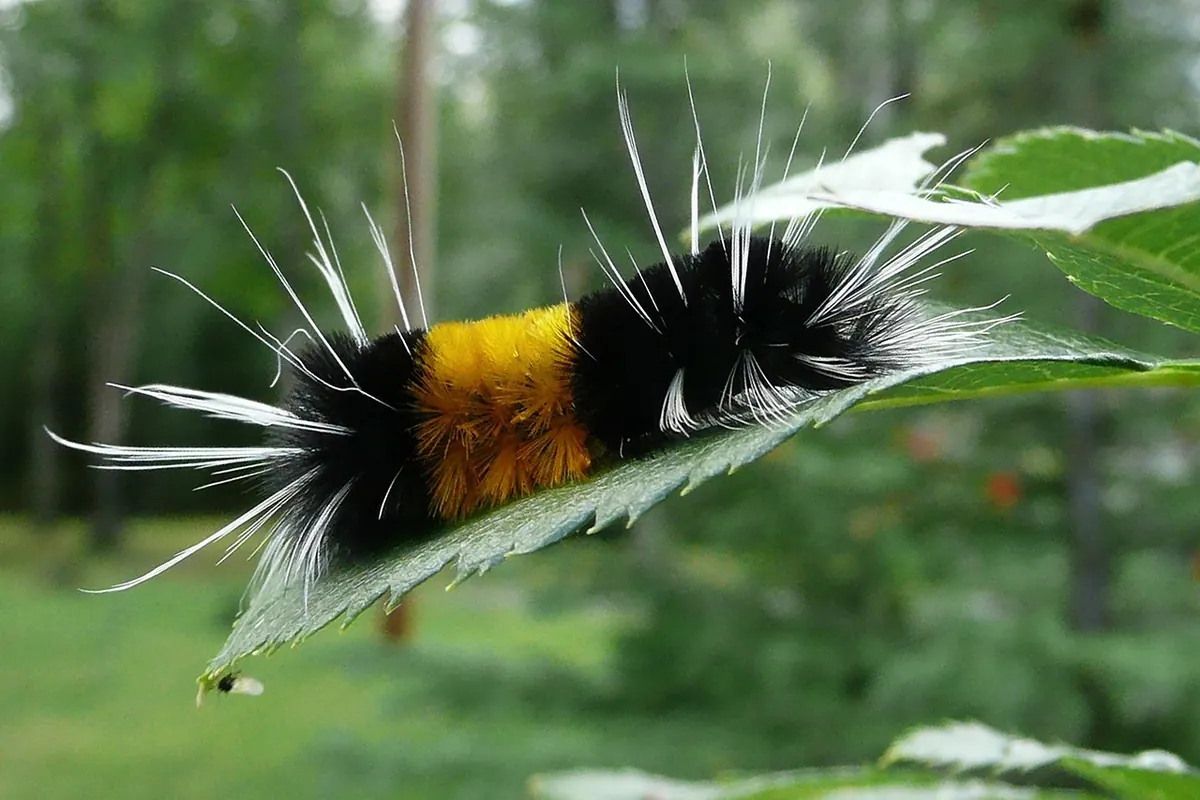
- Woolly bear band width. The bands vary with species and with how far along the caterpillar is. Several similar species get lumped together by anyone counting stripes.
- Persimmon seed shapes. A spoon, a knife or a fork inside a seed is just seed anatomy. The shape doesn't track the atmosphere.
- A heavy acorn crop. Trees vary with weather, stress and their own internal cycles. A mast year is a fact about the tree, not a preview of February.
None of these has a mechanism connecting a plant or an insect in October to the jet stream in January. Meanwhile, ordinary daily forecasts hold up reasonably well to about a week out and then degrade quickly. Seasonal outlooks exist, but they deal in broad probabilities — warmer, cooler, wetter or drier than average across a large region — and they are often wrong about any particular town. If a plant had a genuine edge that forecasters lack, it would be worth a research program. The plants are reading the past season, not the coming one.
Putting the Almanac Back to Work
Here's a way to keep the good half of this tradition. First, learn your own weather direction: check a radar loop for a week and note where rain usually comes from where you live. That single fact tells you whether the red-sky rules apply to you. Second, keep a log with two lines a day — sky, wind direction, and whether anything fell. Within a season you'll know which sayings work in your neighborhood and which are just pleasant.
Third, treat proverbs as triggers rather than forecasts. A halo, a fast-dropping temperature, a sudden shift to an east wind: each is a good reason to glance at the radar and the forecast before you decide about the laundry, the bike ride or the tender seedlings. Fourth, use the short-range ones for the small calls they're suited to, and official forecasts for anything that matters — storms, boats, heat, frost on a crop. A rhyme is a n
Photo: Pexels / Pixabay
You Might Also Like
Woolly bear bands, persimmon seeds, acorn crops and squirrel habits: a field guide to the folk signs said to predict a hard winter, and how to track them yourself.
Baking soda and baking powder leaven differently—one needs acid, the other brings its own. Here's when a swap works and when it ruins taste and texture.